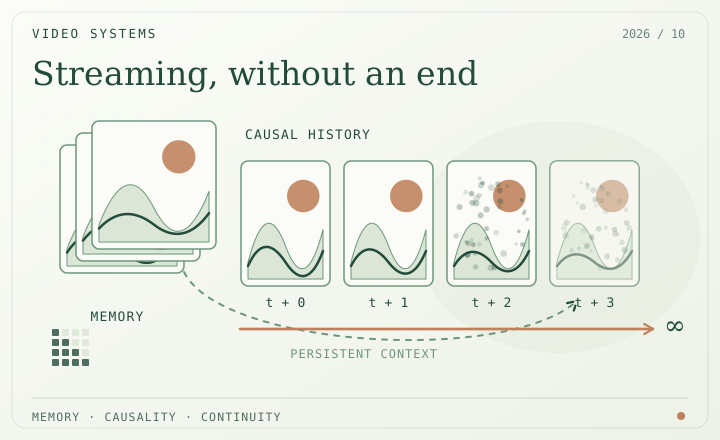
Streaming video generation is a change in the model’s information, state distribution, denoising schedule, and memory. This article develops a unified interpretation of the forcing family through four mismatches, explaining why causal distillation, self-generated histories, rolling denoising, and persistent context must be designed together.
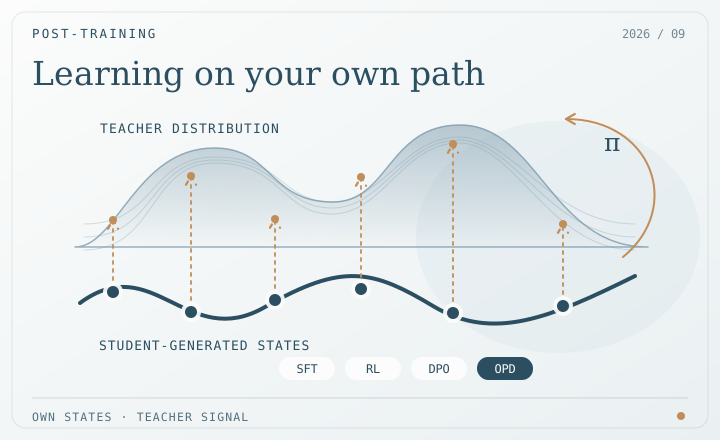
A unified distributional perspective on SFT, RL, DPO, and on-policy distillation, followed by a synthesis of research on teacher compatibility, adaptive supervision, outcome alignment, self-distillation, specialist composition, and training efficiency.
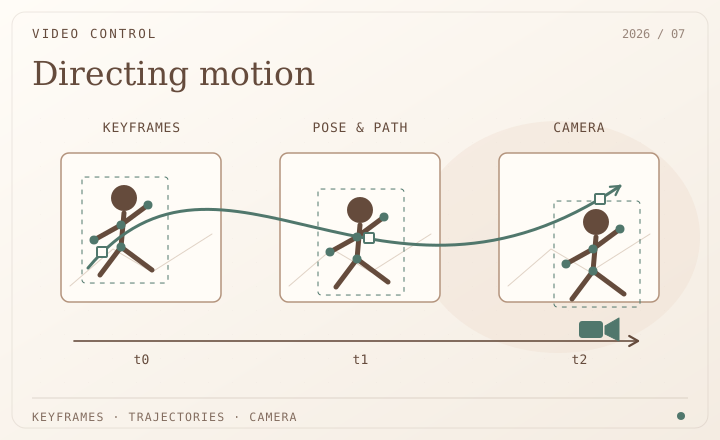
A technical guide to controllable video generation, covering keyframe, structural, trajectory, reference-video, and camera controls. The article unifies these methods through condition organization, spatiotemporal encoding, feature injection, and the distinction between soft guidance and hard constraints.
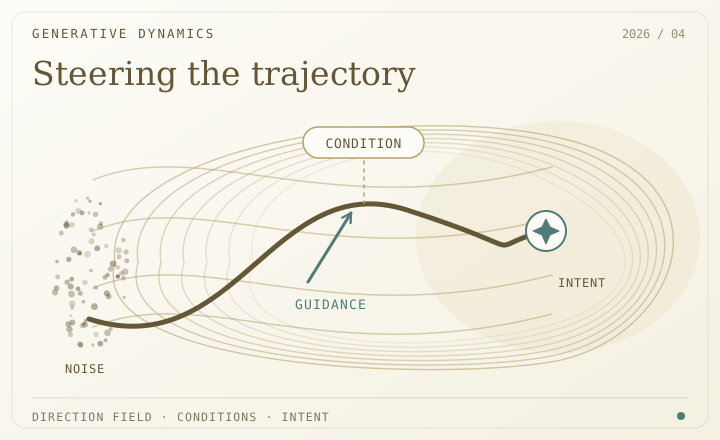
Controllable generation is no longer a collection of isolated tricks built around text prompts or guidance scales. In modern diffusion and flow-based models, control can be imposed by reshaping the sampling dynamics, injecting external conditions, optimizing intermediate states, adapting concept carriers, or training native multimodal interfaces. This article develops a unified dynamical view of guided and controlled generation: from classifier guidance and classifier-free guidance to inversion-based editing, measurement guidance, ControlNet-style structural control, DreamBooth-style personalization, training-free identity injection, and instruction-following image editing. Across these methods, the central question remains the same: how can we steer a generative trajectory toward human-specified intent while preserving realism, diversity, editability, and consistency?
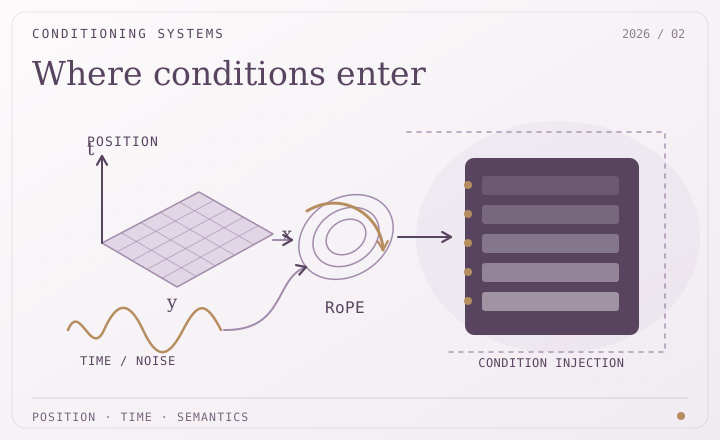
This article presents a unified perspective on embedding space design for diffusion, flow matching, and flow-map generative models, systematically analyzing how spatial, temporal, semantic, and multimodal conditions are encoded and injected into modern generative backbones, with emphasis on controllability, scalability, and multi-resolution generalization.
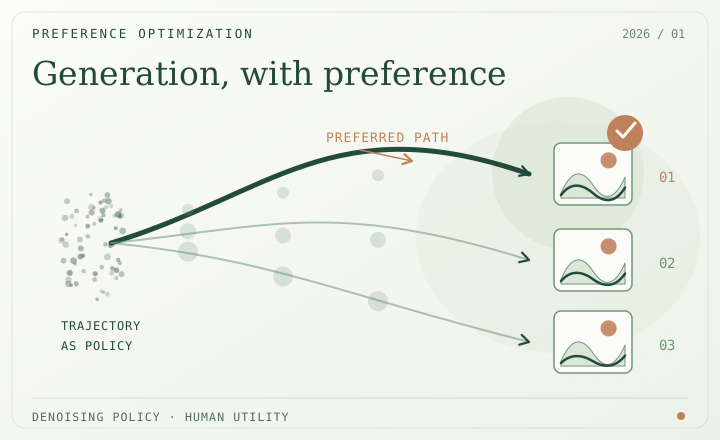
Preference alignment for diffusion and flow-matching models is not merely a collection of post-training tricks, but a problem of reshaping generative trajectories under human-defined utility. This article builds a unified trajectory-policy view that connects reinforcement learning, denoising dynamics, flow-based generation, and preference optimization into a common mathematical framework.
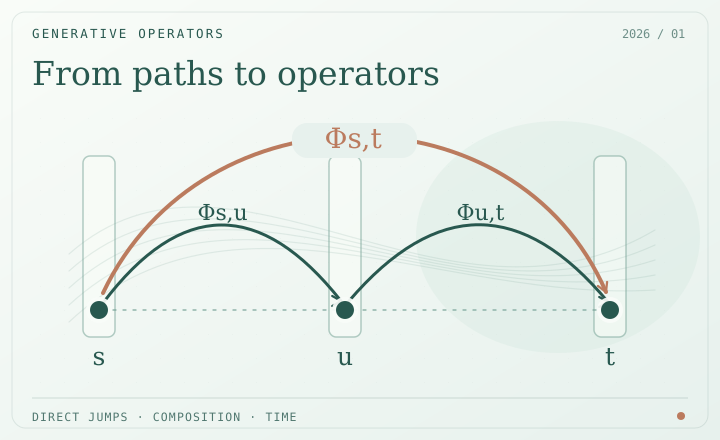
In this post, we reframe continuous-time generative modeling from integrating trajectories to learning two-time operators (flow maps). This operator view unifies diffusion, flow matching, and consistency models, and suggests a practical diagnostic — semigroup-consistent jumps yield both step-robust generation and low compositional drift. We derive Eulerian/Lagrangian distillation objectives and use inpainting experiments to show why semigroup-consistent jumps can be both step-robust and composition-stable.
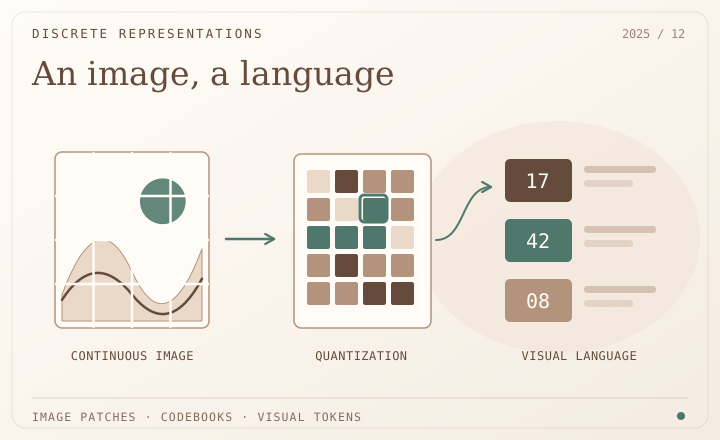
How do we convert continuous images into discrete tokens that large language models can understand? This survey traces the complete evolution of discrete image tokenization—from the groundbreaking VQ-VAE in 2017 to today’s FSQ, LFQ, and TiTok designed for multimodal LLMs. We reveal a compelling narrative of three paradigm shifts: the initial quest for better generative models, the existential challenge from diffusion models, and the remarkable renaissance driven by vision-language unification. Whether you’re building multimodal AI systems or seeking to understand the technical foundations behind models like Chameleon and Emu3, this comprehensive survey provides the complete picture.
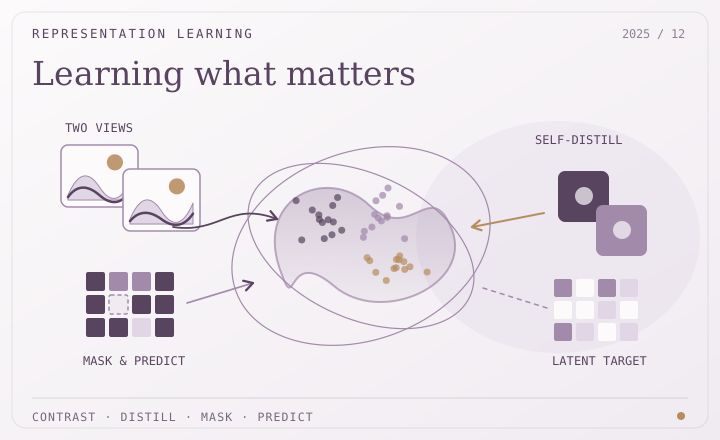
This post provides a systematic, mechanics-first tour of visual representation learning in the foundation-model era—framing representation as the internal currency that enables native multimodality and the unification of understanding and generation. It connects the major paradigms—contrastive learning, negative-free self-distillation, masked modeling (pixel/token/feature targets), generative representations (VAE/AR/Diffusion/GAN), multimodal learning (alignment vs fusion), and JEPA-style joint-embedding prediction—into one coherent map, emphasizing objectives, anti-collapse mechanisms, and what each family’s representations are actually good for.
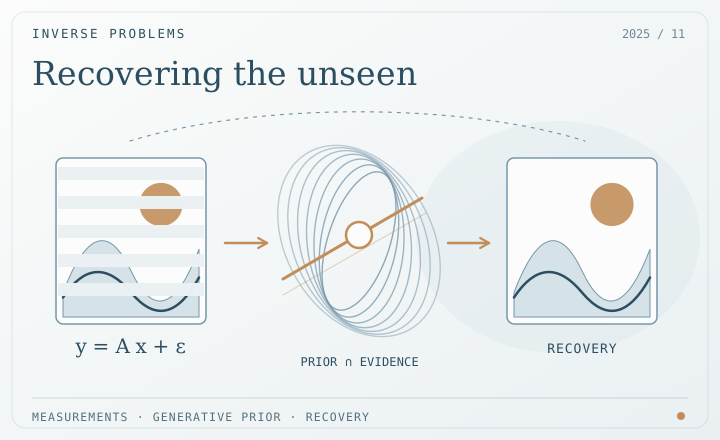
Inverse problems, which aim to recover a signal of interest from indirect and often corrupted measurements, are a cornerstone of computational science and engineering. These problems are typically ill-posed, necessitating the use of prior knowledge to regularize the solution space and ensure a unique and stable reconstruction. This post provides a structured exposition of the evolution of priors in solving inverse problems, from classical formulations to the modern paradigm of deep generative models. This work aims to bridge the conceptual gap between classical and modern techniques, offering a unified view of the role of priors in solving generative inverse problems.
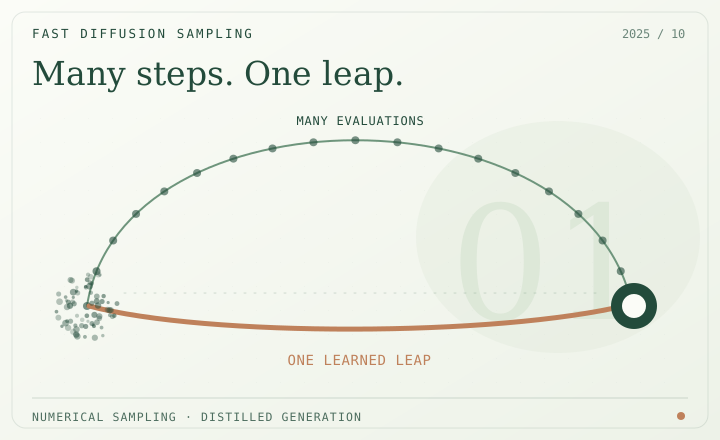
This article takes a deep dive into the evolution of diffusion model sampling techniques, tracing the progression from early score-based models with Langevin Dynamics, through discrete and non-Markov diffusion processes, to continuous-time SDE/ODE formulations, specialized numerical solvers, and cutting-edge methods such as consistency models, distillation, and flow matching. Our goal is to provide both a historical perspective and a unified theoretical framework to help readers understand not only how these methods work but why they were developed.
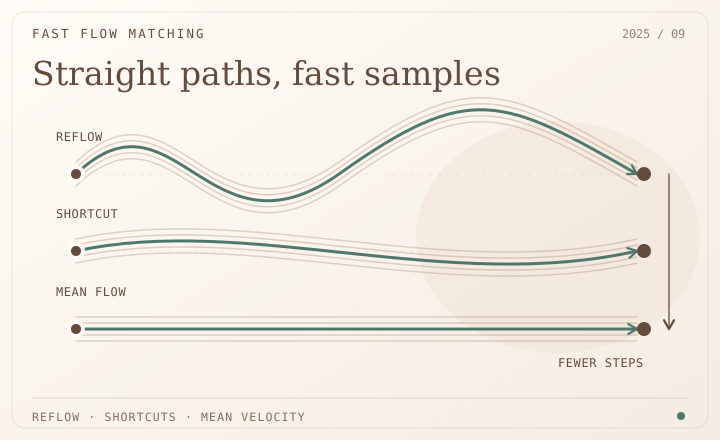
Fast sampling has become a central goal in generative modeling, enabling the transition from high-fidelity but computationally intensive diffusion models to real-time generation systems. While diffusion models rely on tailored numerical solvers to mitigate the stiffness of their probability flow ODEs, flow matching defines dynamics through smooth interpolation paths, fundamentally altering the challenges of acceleration. This article provides a comprehensive overview of fast sampling in flow matching, with emphasis on path linearization strategies (e.g., Rectified Flow, ReFlow, SlimFlow, InstaFlow), the integration of consistency models, and emerging approaches such as flow generators.
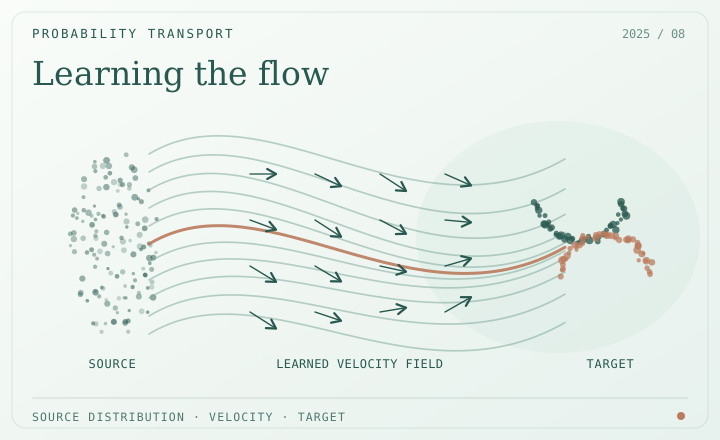
In this post, we uncovered the foundations of Flow Matching: the limitations of diffusion models, the constraints of continuous flows, and the transformative idea of directly learning the path between distributions. From the intuition of Rectified Flow to the unifying lens of Stochastic Interpolants, Flow Matching emerged as more than a method — it is a paradigm that reframes generation as learning currents of transformation. With this conceptual map in hand, we are now ready to move from theory to practice.
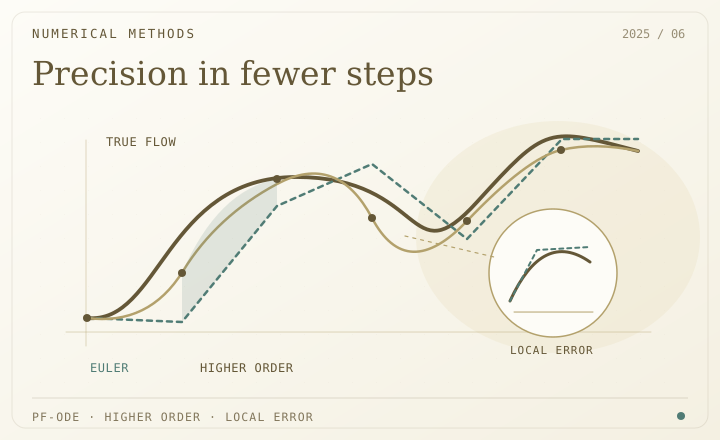
Diffusion sampling can be cast as integrating the probability flow ODE (PF-ODE), but dropping it into a generic ODE toolbox rarely delivers the best speed–quality trade-off. This post first revisits core numerical-analysis ideas. It then explains why vanilla integrators underperform on the semi-linear, sometimes stiff PF-ODE in low-NFE regimes, and surveys families that exploit diffusion-specific structure: pseudo-numerical samplers (PLMS/PNDM) and semi-analytic/high-order solvers (DEIS, DPM-Solver/++/UniPC). The goal is a practical, unified view of when and why these PF-ODE samplers work beyond “just use RK4.”
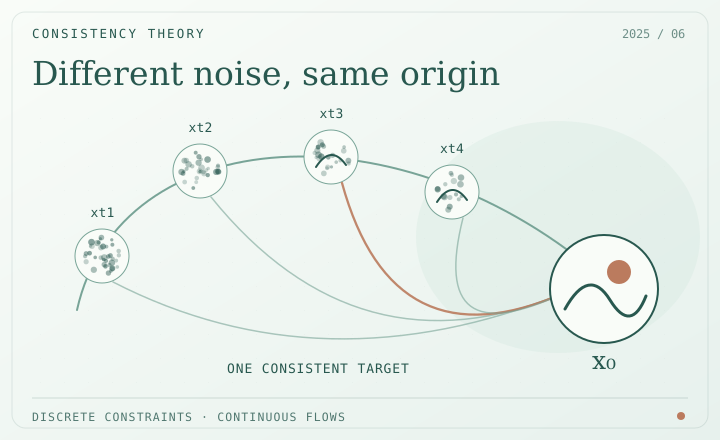
Consistency models (CMs) have recently emerged as a powerful paradigm for accelerating diffusion sampling by directly learning mappings that preserve consistency across noisy representations of the same data. This paper provides a comprehensive study of the Consistency Family, tracing its evolution from discrete consistency models to continuous-time formulations and trajectory-based extensions. We begin by revisiting the foundational motivation behind CMs and systematically derive their discrete and continuous objectives under both consistency distillation and consistency training paradigms.
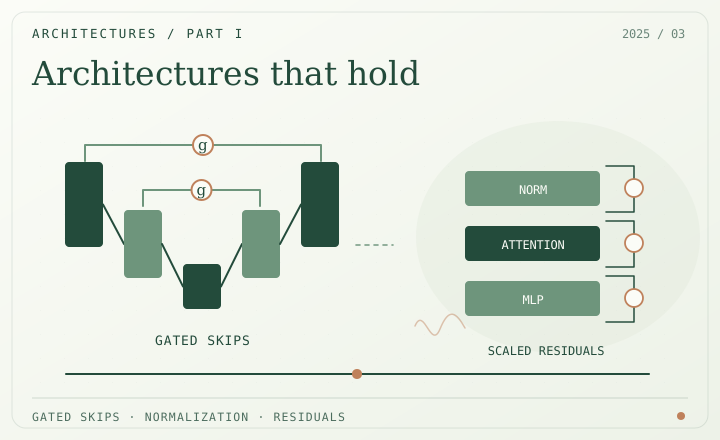
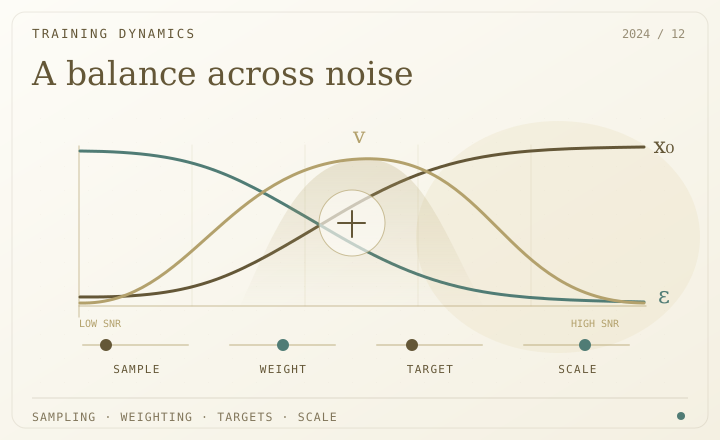
This article explores how network architectures shape the stability of diffusion model training. We contrast U-Net and Transformer-based (DiT) backbones, analyzing how skip connections, residual scaling, and normalization influence gradient propagation across noise levels. By surveying stability-oriented innovations such as AdaGN, AdaLN-Zero, and skip pathway regulation, we reveal why architectural choices can determine whether training converges smoothly or collapses. The discussion provides both theoretical insights and practical design rules for building robust diffusion models.
while diffusion models have revolutionized generative AI, their training challenges stem from a combination of resource intensity, optimization intricacies, and deployment hurdles. A stable training process ensures that the model produces good quality samples and converges efficiently over time without suffering from numerical instabilities.
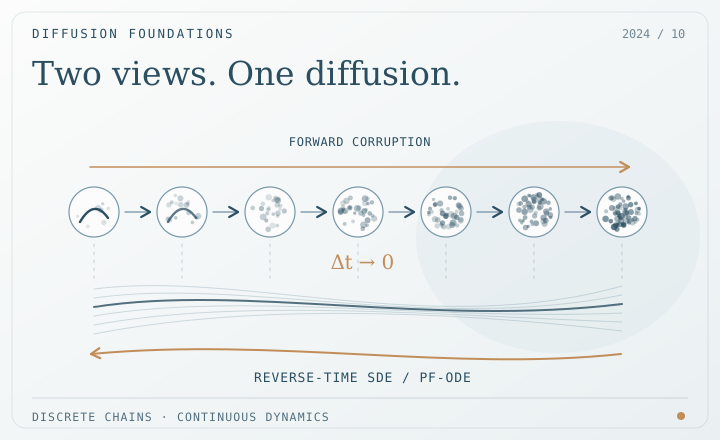
Diffusion models have been shown to be a highly promising approach in the field of image generation. They treat image generation as two independent processes: the forward process, which transforms a complex data distribution into a known prior distribution (typically a standard normal distribution) by gradually injecting noise; and the reverse process, which transforms the prior distribution back into the complex data distribution by gradually removing the noise.